
Wednesday, 16 December 2015

Tuesday, 1 December 2015
What software are we using to edit our film?

To edit our opening two minutes, the main software we are going to be using will be Adobe Premier Elements. This software allows us to put all our clips together to arrange them and edit them to fit together and produce a film. Firstly we are able to cut any unwanted clips or anything that doesn't run through the way we want or expect. The software will allow us to use multiple effects such as fade, swipe, etc. We will be able to use them effects between each clip or alternatively to open or close the scene. We will be able to add sound effects in specific places for extra effect or possibly if any sounds were misheard or were too quiet, we would be able to add them as a new soundtrack. I think that this software will allow us to make our opening two minutes more realistic.
I believe that we will be able to produce a more realistic and successful opening by using Adobe Premier Elements rather than a software like movie maker. This software has a wider range of tools to use and as it says in its name, it has premier elements which are alot more successful to use than other software elements. To edit any images that we have we will possibly use photo-shop as it has multiple tools to use which are able to make the image look more realistic and also to cover up any thing that shouldn't be in it.
We have previously used Adobe Premier Elements to edit our first ever filming's which was the task of saying 'What are you doing here?'. We filmed about 5 different clips around different areas of the school, and using the software we put them all together and firstly added some extra sound effects such as footsteps when walking down the corridor. We then used the software again to edit our continuity task which we found ourselves more able to make better edits. We produced a short clip which involved the 3 types of continuity shots. Overall I think that we will be able to achieve and produce a successful opening two minutes.
What are we using to film our opening two minutes?

To support this, we will have a tri-pod which is being provided from school. This will be there to provide support for the camera and to assure that we are able to run a smooth shot as well as being able to pan without any shaking or uneasiness of the camera. The main concept is to be able to film precisely, especially when doing a still shot.
Target audience research for our film/genre
There are not many horror films that are rated below 15 for those reasons apart from Women in Black which was rated 12A. IMDb rated the violence and gore in the film 6/10 which is fairly high considering that 12 year old's are able to watch it. I don't think that the rating that it has been given is wrong as the people watching are ensured to be accompanied by an adult which is acceptable as they should be able to stop anything that they don't want there child to see. As well as this IMDb has also rated the sex and nudity scenes at 0/10.
Typically at the start of horror films, if they are 15/18+, you are shown the age rating followed by something being said, along the lines of "The following programme contains strong language and sexual scenes", on the screen. This clearly makes the audience aware of what to expect and would be aiming to advise those under the age of 15/18 not to be watching it.
For our horror film, the rating is going to be 15. This is for the reason that it is a wider range and we don't feel like it has many major conventions that would reach the 18 rating. However, I think that we have quite dramatic parts of the film involving a car as well as someone coming back to life which could typically scare those of a younger age as it is to be made quite realistic. I would assume that the majority of any genre film would be rated age 15, as previously said, it is a wider range and would be more likely to attract a larger audience.
A few Horror films rated 15:
Sunday, 22 November 2015
Horror- (chosen genre for opening two minutes)
For our opening two minutes to a film, we decided to do a horror.
Horror is typically a genre that creates a sense of panic and fear to the audience. This genre also rely on making the audience jump and keeping them on the edge of there seats through attempting to present there worst fears and nightmares. Many horror films we see tend to involve mythical characters such as ghosts. They usually involve alot of violence and bad language we we know through there high aged ratings. A few examples of horror films are Saw, A nightmare on Elm Street, Paranormal Activity, Scream, etc.
There are many different sub-genres of horror which consist of:
 Comedy-Horror:
Comedy- horror consists of both comedic conventions along with horror movie themes. The point of the comedy-horror films are typically to scare the audience as well as entertaining them and making the audience laugh.
Teen-Horror:
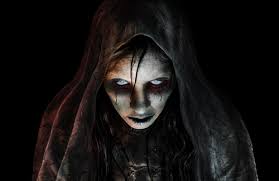 A teen horror is clear through its sub genre title as it would typically revolve around a teenager or a group of teenagers. This genre is more realistic for the audience as they tend to be in there teens which makes it more thrilling for them as if it is something that they could experience. They would usually involve the typical teenage issues such as dating and partying.
Monster-Horror.
A monster-horror would typically involve the horror conventions and would have the same idea to scare the audience however would involve the mythical idea of a monster. This make it more thrilling for the audience although we know it would not be true.
 Zombie-Horror:
Alike the monster-horror this would involve the typical horror conventions along with a zombie which could possibly be someone from the dead or generally a mythical creature. Yet again, the idea would scare the audience although it is science fiction.
Horror is typically a genre that creates a sense of panic and fear to the audience. This genre also rely on making the audience jump and keeping them on the edge of there seats through attempting to present there worst fears and nightmares. Many horror films we see tend to involve mythical characters such as ghosts. They usually involve alot of violence and bad language we we know through there high aged ratings. A few examples of horror films are Saw, A nightmare on Elm Street, Paranormal Activity, Scream, etc.
There are many different sub-genres of horror which consist of:
Comedy-Horror:Comedy- horror consists of both comedic conventions along with horror movie themes. The point of the comedy-horror films are typically to scare the audience as well as entertaining them and making the audience laugh.
Teen-Horror:
Monster-Horror.
A monster-horror would typically involve the horror conventions and would have the same idea to scare the audience however would involve the mythical idea of a monster. This make it more thrilling for the audience although we know it would not be true.
Alike the monster-horror this would involve the typical horror conventions along with a zombie which could possibly be someone from the dead or generally a mythical creature. Yet again, the idea would scare the audience although it is science fiction.
Saturday, 21 November 2015
Saturday, 7 November 2015
Continuity editing
180 degree rule:
The 180 degree rule is a rule which states that characters in a film, if having a conversation or if filming in one place for a longer period of time, then the camera must stay within the 180 degree angle (on one side). If this rule is broken, it can often work however it can also often confuse the audience.

The 180 degree rule is a rule which states that characters in a film, if having a conversation or if filming in one place for a longer period of time, then the camera must stay within the 180 degree angle (on one side). If this rule is broken, it can often work however it can also often confuse the audience.

Shot reverse shot:
A short reverse shot is typically used during a conversation when the camera focuses on one person then pans to the other person then back again. This is used to alternate between the two characters throughout the conversation to allow the audience to see the characters from either perspective. Below is an example of shot-reverse-shot in a film. We are able to clearly see that the camera is alternating between the two character, back and forth, which is a shot reverse shot.
Match on action:
Match on action is the technique of one shot cutting to another, from a different angle, showing the action of the subject. By carrying the action through using this technique creates some sort of connection or bridge which makes the audience more engaged and focusing on the action itself rather than the cutting of it.
Subscribe to:
Posts (Atom)